Freedom and Restraint for the Gifted
The Night CleanerFreedom and Restraint for the Gifted names a central conflict: whether people with supernatural powers should be allowed to live openly and choose how to use them, or whether their power must be controlled. Dorian frames secrecy and oversight as oppression, and promises a life without fear. Yet his own account of freedom places gifted people above humans and leads him to build an army. The conflict is therefore not simply liberty against restraint; it is also a struggle over who gets to define freedom, and who bears the cost of its pursuit.
Freedom as Dorian Defines It
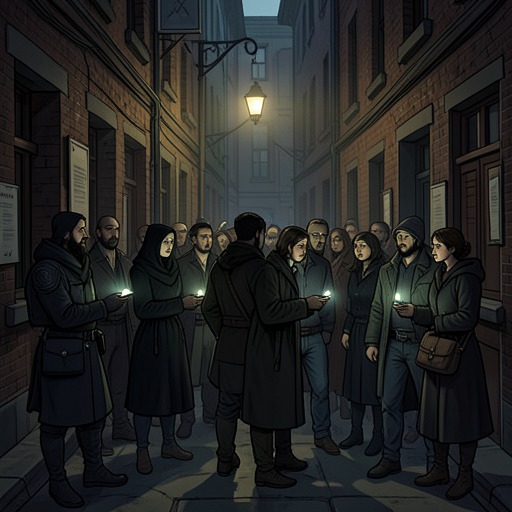
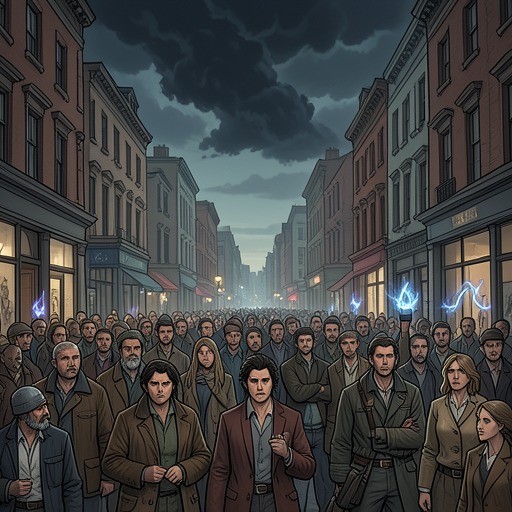
Dorian’s argument begins with the promise that people with powers should be able to live without hiding or being told who they may become. The people he gathers have encountered chaos in their lives, and he wins them over by offering protection from fear and the right to define themselves. He presents their powers as something to embrace rather than belittle. In this vision, coming into the open is not merely a change in public status: it is a release from the expectation that gifted people must conceal themselves and serve humanity from the shadows.
But Dorian’s account also reveals the hierarchy beneath that promise. He calls his recruits his weapons and thinks of humans as beneath them—and beneath him. His resentment is not limited to the rules imposed on gifted people; it has become a conviction that their power makes them superior. The language of self-determination thus sits beside a refusal to regard humans as equals. The contradiction matters: Dorian seeks freedom from the authority of others while claiming a position of dominance over them.
His political objective makes that tension sharper. He plans to become immortal, stop Draco from succeeding in his mission, and allow mankind to fall into its own chaos. He says he understands why people given divine power would use it for their own needs, but criticizes Draco for judging some of them unfit and says Hero Society still forgives him for killing people like them. These are Dorian’s accusations, presented through his own perspective; they explain his sense of grievance without making his description of the Society a neutral account. His plan to unleash his followers is not simply a demand for recognition. It is also an effort to defeat his opponent and accept humanity’s collapse as a consequence.
An Army Built in Freedom’s Name
Dorian turns his argument into an organized force. He creates a version of Hero Society made up of people who are not clones but have the same kinds of powers as its members. His force includes strength, empathy, shifting ability, technical expertise, and a killer; he regards magic as the one missing power and of little use against divine power. Their training makes control an explicit concern: Dorian tells the recruits to keep practicing so they can master their new abilities. The contrast is pointed. He opposes a group he sees as controlling the gifted, yet he also directs a force, trains it, and prepares to unleash it.
Power is central to both his method and his ambitions. Dorian has gained immortality through the blood of gifted people, and he regards Draco’s blood as the key to his larger plan. He also possesses power connected to his father, Apollo, and can access future visions when he chooses. This ability differs from Phillip’s: Phillip’s sight of the future is constant, while Dorian can turn his own on and follow the future that suits his chosen path. The contrast makes Dorian’s language of choice especially charged. His visions do not simply disclose one fixed outcome; as he describes them, they help him pursue a preferred one.
Resistance and Competing Claims
The conflict appears outside Dorian’s own speeches as well. A woman warns Draco and Asher that their group wants people controlled, while her own side wants freedom. She urges the narrator not to join them and says they will not last if they stand in her group’s way. Her actions make clear that the dispute has become physical: she uses her power to send Asher back before escaping. The scene does not establish that her side’s methods are just, but it shows that the word freedom belongs to more than Dorian. The opposing groups each present themselves as resisting control, and each treats the other as a threat.
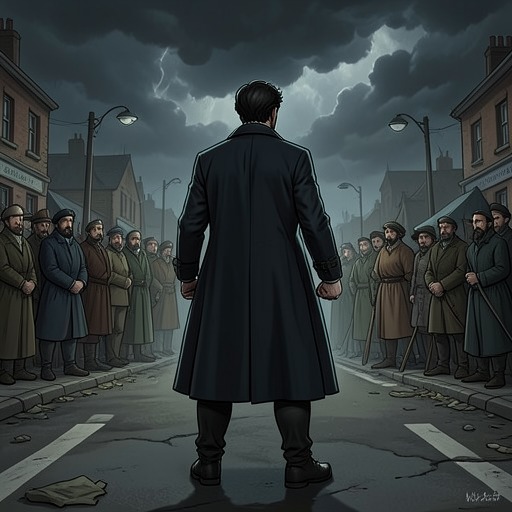
That contest becomes open warfare when Dorian’s crew confronts Hero Society. The Society’s members report that they were caught by surprise, confined in a containment room, and that their headquarters was ransacked. Later, Dorian’s army celebrates victory, but the scene includes fallen members of Hero Society. Dorian insists that he gave them a chance to join him and abandon the Society. He denies wanting to rule the world as a king, describing his aim instead as bringing gifted people into the open, where they can live as they were meant to. His stated rejection of monarchy does not erase the force used to advance that aim, or the deaths accompanying his claimed offer of choice.
The Cost and Meaning of the Conflict
The aftermath refuses to settle the dispute by letting Dorian’s victory speak for itself. Echo, still standing beside Asher, tells Dorian that Hero Society will never give up. Rose is among the fallen, and the surviving opposition remains defiant. Their resistance distinguishes the desire to protect people from the desire to win: Hero Society may be the object of Dorian’s charges, but its members do not all accept his account of what freedom requires.
The concept’s central tension is therefore between liberation from enforced concealment and restraint against the harms power can cause. Dorian identifies a real stake in the story’s conflict: gifted people fear control, and secrecy keeps them from living openly. Yet his response makes freedom conditional on allegiance to his force and depends on treating humans as inferior. Hero Society, meanwhile, is presented through Dorian’s criticism as an authority that judges who may use power, while its members’ own actions and opposition remain part of the conflict rather than a complete answer to it. Freedom and restraint are not cleanly assigned to opposing sides. The decisive question is whether living openly can mean self-determination without becoming permission for the powerful to rule everyone else.